The term “useful knowledge” has become quite a catch-phrase ever since the 2025 Economics Nobel was announced. “Useful knowledge” refers to scientific or practical understanding that directly benefits society. Meaning, knowledge that can be applied to improve living conditions, technology, health or the economy.
Since the 18th and 19th centuries, thinkers and inventors increasingly began linking scientific inquiry with social progress. In 2025, Mokyr, Aghion and Howitt got what is often called the Nobel Prize in Economics "for having explained innovation-driven economic growth".
Their ideas centre on innovation-driven growth. They show how the steady creation and adoption of new ideas fuel long-term economic progress.
Mokyr traced the historical roots of how societies that encouraged science, curiosity and open knowledge networks to trigger sustained growth. Aghion and Howitt came up with their theory of “creative destruction,” where new technologies continually replace old ones. This drives productivity and disrupts existing firms and jobs.
Their work seeks to explain how economies evolve through innovation, competition and institutional support.
For a tiny region which has limited options, the ideas mentioned above are exciting for Goa. In the past, Goa was a region where ideas met and clashed. Can it once again leverage “useful knowledge” to its benefit? Or, has Goa lost its global vision and become more inward looking?
But let's remind ourselves of what was possible....
It might not be wrong to argue (even if politically incorrect today) that Goa historically promoted innovation and “useful knowledge” through its early embrace of printing, education and cross-cultural exchanges in Portuguese times.
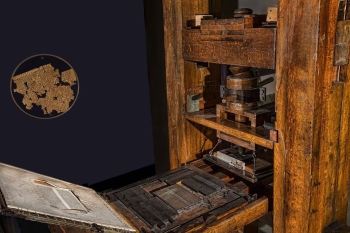
The arrival of Asia’s first printing press in 1556 made Goa a centre for disseminating knowledge across the Indian Ocean world. We today believe that this press only put out religious texts; but that is not true. Besides language texts and grammars (that helped to understand the outside world), it also crafted works on local botany and medicinal plants, and maps of the world. The latter spelt huge medical benefits, and also geographical understanding to navigate lands which were earlier new and strange.
Jesuit institutions like the College of St Paul and later the Rachol Seminary trained scholars in not just in theology. It gave them knowledge in medicine, astronomy and the natural sciences. This blended European and local expertise.
Goan physicians, artisans and shipbuilders applied this knowledge practically. Grafting it on what they knew, they got a head-start in healing, navigation and trade. Later Goan diasporas carried it abroad. Thus, centuries before modern development theories, Goa fostered a distinctive culture of “useful knowledge” rooted in education, adaptability and global exchange.
History holds out other lessons too. For instance, the Mughals built immense wealth in India not through colonial extraction in the later European sense. Instead, they did so by embedding themselves within and expanding existing Indian systems of production and trade.
Indeed, they harnessed the subcontinent's rich agriculture, and its surplus in textiles, spices and metals. They built an efficient land revenue system (zabt).
Rather than exporting wealth abroad, Mughal rulers reinvested it locally in grand architecture, armies and urban economies. This stimulated crafts and commerce. They centralised the administration, used silver currency and offered patronage of artisans and traders. This created one of the world’s richest pre-industrial economies.
It's always a challenge to understand the Portuguese colonial encounter with Goa, and how it worked.
The Portuguese arguably built wealth (or extracted) in Goa by turning it into the commercial and administrative hub of their Asian empire, strategically positioned between Europe, Africa and the Indian Ocean trade routes.
Once entrenched, they imposed customs duties and monopolies on lucrative goods such as spices, horses, textiles and gold. They channeled their profits through the Casa da Ãndia system and controlling sea routes with their naval power. (Despite its name, it oversaw operations across Asia and Africa too.)
Wealth also flowed from religious patronage, land grants and the taxation of local agriculture, fisheries and trade communities. Unlike the Mughals, however, much of this wealth was extracted and remitted to Lisbon, limiting local reinvestment. Yet, the city's cosmopolitan trade, shipbuilding, and missionary networks are said to have made Goa a vital node of global exchange and a laboratory of colonial administration and “useful knowledge” in Asia.
We have a certain understanding of the term 'colonial', so might interpret this in that manner. But there are some things worth remembering.
The wealth of the Portuguese empire was drawn less from Goa itself and more from the vast network it controlled across Asia, Africa, and Brazil. Goa served mainly as the administrative and logistical hub.
While Goa contributed revenue through local taxes, trade duties and agriculture, the real profits came from controlling the movement of high-value goods. For instance, spices from the Moluccas, textiles from Gujarat and Bengal, horses from Arabia, and gold and slaves from East Africa.
These were traded through Goa, taxed and shipped onward to Lisbon. So, you could say, Goa was the empire’s clearinghouse and command centre; it was not its principal source of wealth. It managed and profited from global exchange rather than producing riches on its own.
This is not a case for a return to the past. But for rethinking how we shape, use and deploy knowledge. Whatever it's source. It can be done in ways that foster a local innovation ecosystem, encourages creative destruction and promotes relevant research and higher education.
To be meaningful, it would also require a digital upgrade for traditional industries, a boost to small-scale manufacturing, and incentives for green innovation.
Goa badly needs its own forms of cultural innovation, knowledge-sharing institutions (that link Goan entrepreneurs with global innovators and investors); support for youth entrepreneurship, and streamlining regulation so that it is easier for small innovators to launch new ideas.
Too much to expect?